Neuro Memory
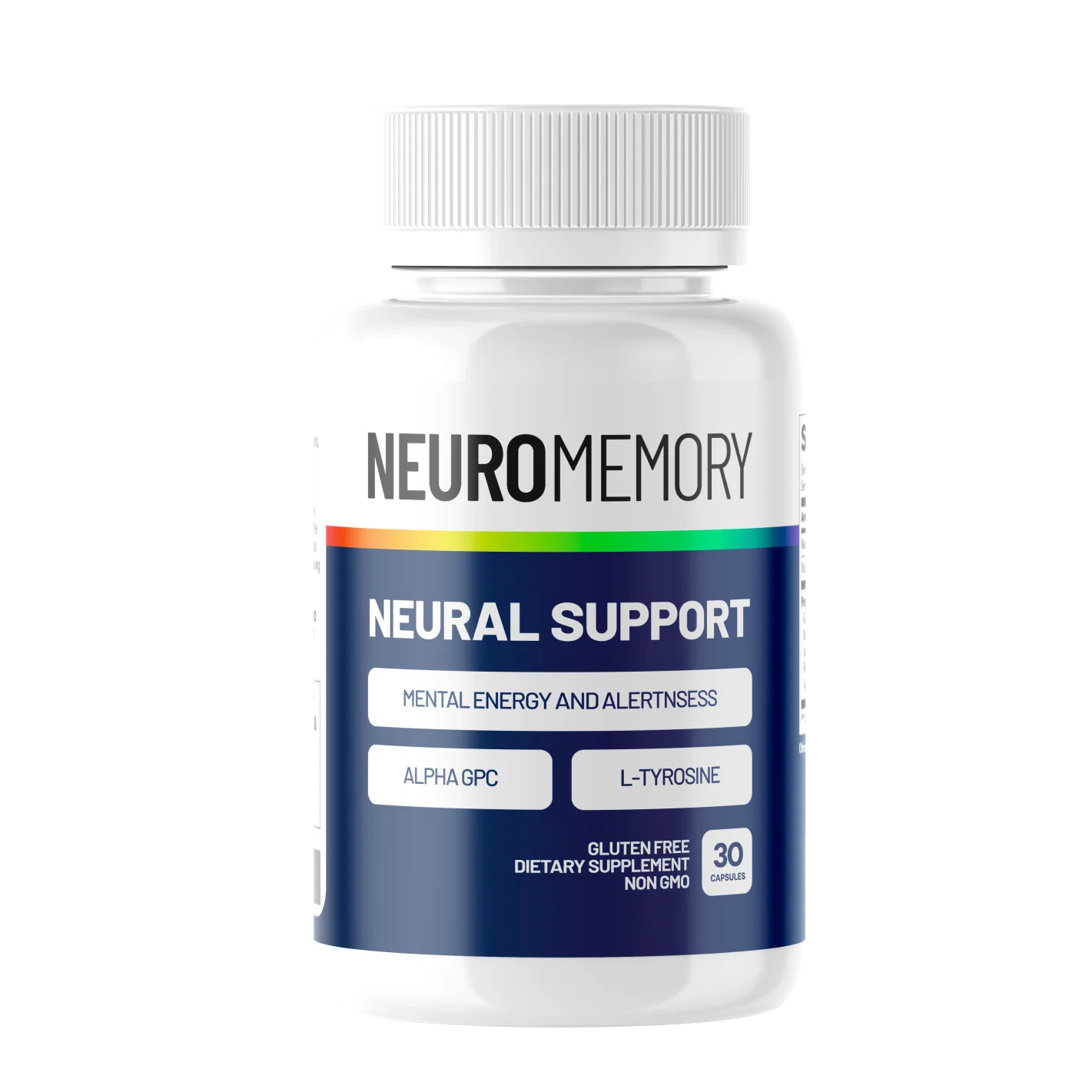
Neuro Memory supplement bottle with navy and slate label design 8 Researched Ingredients
Cognitive Support Formula

Neuro Memory

A daily formula built around eight ingredients studied for memory, focus and mental clarity

Neuro Memory combines Bacopa Monnieri, Ginkgo Biloba, L-Theanine, Phosphatidylserine, Rhodiola Rosea, Vitamin B Complex, Acetyl-L-Carnitine and Alpha-GPC in a single daily formula. Each ingredient has a distinct, published line of human research behind it, from cerebral blood flow to acetylcholine synthesis, and this page walks through what that research actually shows — including its limits.

This is an editorial, research-based overview of Neuro Memory, not a medical claim. Supplements are not evaluated by the FDA to diagnose, treat, cure or prevent disease, and results vary by individual.

8Active ingredients
60-DayGuarantee window
Get Your Discount Now

At A Glance

What does Neuro Memory actually contain?

Neuro Memory is an 8-ingredient capsule formula combining three families of cognitive-support compounds: cholinergic precursors (Alpha-GPC), botanical adaptogens (Bacopa, Rhodiola, Ginkgo), and cellular-energy cofactors (Acetyl-L-Carnitine, B-Complex, Phosphatidylserine, L-Theanine). The table below summarizes the formula.

AttributeDetail
ProductNeuro Memory
CategoryCognitive support / nootropic supplement
Core ingredientsBacopa Monnieri, Ginkgo Biloba, L-Theanine, Phosphatidylserine, Rhodiola Rosea, Vitamin B Complex, Acetyl-L-Carnitine, Alpha-GPC
FormOral capsules, daily use
Typical study duration referenced8–24 weeks, depending on ingredient
Reported guarantee window60 days guarantee
§2 — Definition

What is Neuro Memory?

Neuro Memory is an oral dietary supplement that combines eight ingredients — Bacopa Monnieri, Ginkgo Biloba, L-Theanine, Phosphatidylserine, Rhodiola Rosea, Vitamin B Complex, Acetyl-L-Carnitine and Alpha-GPC — into a daily capsule formula positioned to support memory recall, sustained focus, and mental clarity in adults.

Diagram showing the eight Neuro Memory ingredients arranged around the Neuro Memory formula core

Rather than relying on a single "miracle" compound, Neuro Memory is formulated as a stack: it pairs a fast-acting amino acid (L-Theanine) with slower-building botanical adaptogens (Bacopa Monnieri, Rhodiola Rosea) and structural or metabolic nutrients (Phosphatidylserine, Acetyl-L-Carnitine, Alpha-GPC, B-Complex). That mirrors how these ingredients are generally used in the human research literature — as long-term daily inputs rather than one-off stimulants.

Ginkgo Biloba is included for its studied role in cerebral blood flow, while Alpha-GPC and Acetyl-L-Carnitine target acetylcholine, the neurotransmitter most closely tied to learning and memory encoding. The Neuro Memory mechanism page breaks down exactly how each of these fits together.

§3 — Formulation Logic

Why does the Neuro Memory formula stand out?

Neuro Memory stands out primarily because of ingredient diversity across mechanisms — blood flow, neurotransmitter synthesis, cellular energy and stress resilience — rather than relying on one heavily marketed compound. Below is what differentiates the formulation approach.

Multi-pathway coverage

Instead of one mechanism, Neuro Memory's ingredients span blood-flow support (Ginkgo), cholinergic precursors (Alpha-GPC), and stress-axis modulation (Rhodiola) — areas researchers study separately for cognition.

Individually studied ingredients

Each of the eight ingredients has independent human clinical research behind it (linked throughout this page), rather than relying solely on proprietary-blend marketing claims.

Daily-use design

Dosing is intended for sustained daily use, matching how most of the underlying research protocols (8–12+ weeks) were actually run, rather than promising an instant single-dose effect.

§4 — Mechanism of Action

How does Neuro Memory work? A component-by-component breakdown

Neuro Memory works through eight ingredients that act on different parts of brain function: acetylcholine synthesis (Alpha-GPC, Acetyl-L-Carnitine), cerebral blood flow (Ginkgo Biloba), neuronal membrane structure (Phosphatidylserine), the stress-response axis (Rhodiola Rosea), calm-focus neurochemistry (L-Theanine), oxidative balance (Bacopa Monnieri) and cellular energy metabolism (Vitamin B Complex). Each is detailed below with its studied need, role, and an honest verdict.

01

Bacopa Monnieri — why is it in Neuro Memory?

Ayurvedic nootropicTriterpenoid saponinsChronic dosing ≥12 wks

The need it addresses

Age-related and stress-related slowing of information processing speed and working memory.

Why it's included

Bacopa's triterpenoid saponins (bacosides) are believed to support neurotransmitter balance and reduce oxidative stress in neural tissue, the traditional rationale for its long use in Ayurvedic medicine for memory.

A widely cited meta-analysis pooling nine randomized, placebo-controlled trials (437 participants, all dosed for at least 12 consecutive weeks) found that standardized Bacopa extract shortened Trail-Making Test B time and reduced choice reaction time versus placebo, both markers of processing speed. However, a more recent, smaller comparative review found no measurable benefit on working memory, attention or overall cognitive performance in its pooled trials — a reminder that Bacopa's evidence is real but mixed, and strongest specifically for attention speed, not memory recall in general.


Verdict: Reasonable inclusion, chronic dosing required. Best-supported effect is processing speed, not memory itself; treat memory-specific claims with caution.
02

Ginkgo Biloba — why is it in Neuro Memory?

Cerebral blood flowGinkgolides / bilobalides240 mg/day studied

The need it addresses

Reduced oxygen and nutrient delivery to brain tissue, associated with mental fatigue and slower thinking.

Why it's included

Ginkgolides antagonize platelet-activating factor, which is thought to reduce microthrombosis and improve blood flow, while bilobalides may influence BDNF, a protein tied to synapse maintenance.

Mechanistic reviews describe how Ginkgo extract enhances cerebral blood flow and modulates neurotransmitter systems in ischemic brain-injury models. In people, the picture depends heavily on who's tested: an Alzheimer's research foundation review concluded Ginkgo may improve memory in people who already have cognitive impairment, but does not enhance cognition or prevent dementia in healthy individuals. That distinction matters for anyone expecting a stimulant-like effect.

Verdict: Solid mechanistic basis and long safety record; clinical benefit is clearest for people with existing cognitive decline, unproven for enhancing an already-healthy brain.
03

L-Theanine — why is it in Neuro Memory?

Green tea amino acidAlpha brainwave activity~200 mg studied dose

The need it addresses

Mental tension and distraction that undermine sustained focus, without wanting drowsiness.

Why it's included

L-Theanine crosses the blood-brain barrier and is thought to modulate glutamate receptor binding, producing a "calm alertness" rather than sedation.

EEG-based trials have repeatedly shown a single 200 mg dose increases alpha brainwave activity, a pattern linked to relaxed wakefulness. A 28-day randomized trial similarly reported reduced perceived stress and improved cognitive attention versus placebo. That said, an independent 2026 review cautions that findings on L-theanine are often inconsistent and rigorous large-scale human trials remain limited.

Verdict: Among the faster-acting ingredients in the stack, with a favorable safety profile; evidence quality is still building.
04

Phosphatidylserine — why is it in Neuro Memory?

PhospholipidNeuronal membrane component100–300 mg/day studied

The need it addresses

Age-related decline in neuron membrane integrity, which affects how efficiently brain cells signal one another.

Why it's included

Phosphatidylserine is a structural phospholipid built into cell membranes and is involved in signal transduction and cell-to-cell communication.

In one of the field's largest trials, 494 elderly patients with cognitive decline took 300 mg/day of phosphatidylserine or placebo for six months; the treated group showed statistically significant improvements on behavioral and cognitive rating scales. A more recent systematic review of nine studies (961 participants total) concluded phosphatidylserine had a positive overall effect on memory in older adults, across doses of 100–300 mg/day.

Verdict: One of the better-evidenced ingredients in the formula for memory specifically, though most trials were run in older adults with existing memory complaints rather than healthy young adults.
05

Rhodiola Rosea — why is it in Neuro Memory?

AdaptogenHPA-axis modulationSHR-5 extract studied

The need it addresses

Mental fatigue and reduced concentration that build up under sustained stress or sleep deprivation.

Why it's included

As an adaptogen, Rhodiola is thought to interact with the HPA (hypothalamic-pituitary-adrenal) stress axis and cortisol-related signaling.

In a double-blind, cross-over trial of 56 physicians working night shifts, a standardized Rhodiola extract (SHR-5) produced a statistically significant improvement in total mental performance and reduced fatigue-related decline across five cognitive tests. A broader review notes Rhodiola's anti-fatigue effect is one of its more consistently replicated findings, alongside emerging evidence for attention and mental resource allocation.

Verdict: Reasonably well-supported for fatigue and stress-related cognitive dips specifically; not a general-purpose memory enhancer on its own.
06

Vitamin B Complex — why is it in Neuro Memory?

B6, B9, B12 focusHomocysteine loweringEnergy metabolism cofactor

The need it addresses

Elevated homocysteine, a compound linked to brain atrophy, and suboptimal energy metabolism in brain cells that contributes to mental fatigue.

Why it's included

B-vitamins are required cofactors for methylation reactions that clear homocysteine and for mitochondrial energy production inside neurons.

The VITACOG randomized controlled trial gave high-dose folic acid, B6 and B12 to 271 older adults with mild cognitive impairment; the treated group showed a significantly slower rate of brain atrophy on MRI compared to placebo, an effect concentrated in participants with elevated baseline homocysteine. Follow-up metabolomics work on the same cohort found B-vitamin supplementation reprogrammed several metabolic pathways tied to brain energy use and neurotransmission.

Verdict: The homocysteine-lowering mechanism is genuinely well-documented; benefit is most established in people who start with elevated homocysteine, not universally in every adult.
07

Acetyl-L-Carnitine — why is it in Neuro Memory?

ALCARMitochondrial energy1.5–3.0 g/day studied

The need it addresses

Declining cellular energy production in neurons and reduced acetylcholine turnover associated with age-related cognitive slowing.

Why it's included

ALCAR crosses the blood-brain barrier more readily than plain L-carnitine and supports mitochondrial fatty-acid metabolism plus acetylcholine-related neurotransmission.

A 2003 meta-analysis pooling 21 clinical trials and 1,204 adults with mild cognitive impairment or early Alzheimer's found ALCAR outperformed placebo on cognitive measures, though a research-foundation summary cautions the effect size is likely small and possibly not noticeable to the individual. Separately, serum ALCAR levels have been observed to decline progressively from healthy individuals through cognitive impairment, supporting its biological relevance even where the supplemental effect is modest.

Verdict: Biologically plausible and studied mainly in impaired populations at gram-level doses; don't expect a dramatic, noticeable lift in an otherwise healthy adult.
08

Alpha-GPC — why is it in Neuro Memory?

Choline alfoscerateAcetylcholine precursor300–1200 mg/day studied

The need it addresses

Reduced acetylcholine availability, the neurotransmitter most directly implicated in encoding new memories and sustaining attention.

Why it's included

Alpha-GPC delivers choline efficiently across the blood-brain barrier, where it becomes a direct raw material for acetylcholine synthesis.

A 2024 randomized, placebo-controlled trial in 100 adults with mild cognitive impairment found 12 weeks of 600 mg/day Alpha-GPC produced a significantly greater improvement on the ADAS-Cog cognitive scale than placebo, with no increase in adverse events. A 2023 systematic review and meta-analysis of the broader choline-alfoscerate literature similarly found measurable benefits when combined with standard cognitive treatment in adults with diagnosed decline. A separate synthesis notes that in healthy, non-impaired adults, the evidence for a noticeable cognitive boost is much thinner than in clinical populations.

Verdict: The strongest single mechanistic story in the formula (direct acetylcholine precursor) with real RCT support — mainly demonstrated in people with diagnosed cognitive impairment rather than healthy adults seeking enhancement.

Reading the mechanism section honestly: most of the strongest human trial results above come from older adults or people with diagnosed mild cognitive impairment — not healthy young adults looking for an edge. That doesn't make the ingredients pointless; it means expectations should be calibrated to what was actually measured, not to marketing shorthand. See the Neuro Memory Research Library for the full source list.

§5 — Formulated Benefits

What are the potential benefits of Neuro Memory?

Based on the published research behind its eight ingredients, Neuro Memory is formulated to support four areas: processing speed and attention, cerebral blood flow, calm sustained focus, and long-term neuron membrane and energy health. These are ingredient-level research findings, not guaranteed outcomes for every user of Neuro Memory.

Attention & processing speed

Bacopa Monnieri's best-replicated effect in trials is faster reaction time and Trail-Making Test performance after 12+ weeks of consistent use.

Cerebral blood flow support

Ginkgo Biloba's ginkgolides are studied for reducing microthrombosis and supporting oxygen delivery to brain tissue.

Calm, sustained focus

L-Theanine is studied for increasing alpha brainwave activity — a relaxed-but-alert state — without the crash associated with stimulants.

Memory-related signaling

Phosphatidylserine and Alpha-GPC both target the physical and chemical infrastructure of memory encoding: membrane integrity and acetylcholine.

Stress-related mental fatigue

Rhodiola Rosea is one of the more consistently studied adaptogens for reducing fatigue-driven cognitive decline under sustained stress.

Cellular energy metabolism

B-Complex vitamins and Acetyl-L-Carnitine both support the mitochondrial and homocysteine-related pathways that underlie sustained mental energy.

§6 — Editorial Review Summary

How does Neuro Memory hold up under scrutiny?

This is our editorial assessment of Neuro Memory based on the underlying ingredient research, not a collection of customer testimonials — we have not independently verified individual user results, so we don't publish invented review quotes.

B+
★★★★☆

Editorial grade based on ingredient evidence quality, dosing transparency, and safety profile — not a customer satisfaction score.

Where Neuro Memory earns credit: every one of its eight ingredients has independent, published human research behind it, which is more transparency than many competitors in the category offer. The mechanistic story — blood flow, acetylcholine, membrane health, stress resilience — is coherent rather than a random ingredient list.

Where to stay skeptical: much of the strongest clinical evidence for ingredients like Alpha-GPC, Phosphatidylserine and Acetyl-L-Carnitine comes from older adults or people with diagnosed mild cognitive impairment, not healthy adults seeking a performance edge. Exact per-capsule dosages for Neuro Memory itself are set by the manufacturer and should be checked against the label before assuming any study's dose was matched.

Practical takeaway: Neuro Memory is a reasonably well-justified formula on paper. Whether it delivers a noticeable difference for a given individual is not something any label, or this article, can promise in advance.

Reviewer

Marry M. - Chicago, USA

Verified Purchase

I was looking for something that would fit easily into my daily routine. After using Neuro Memory consistently, I noticed that I felt more organized and focused during my day. It has become one of the simple habits I like keeping in my routine.

Reviewer

David S. - Dallas, USA

Verified Purchase

My days can get pretty busy, so I wanted something simple that I could stick with. Neuro Memory has been easy to include in my routine, and I like how consistent it feels from day to day. It has quickly become part of my morning habits.

Reviewer

Michael T. - Chicago, USA

Verified Purchase

I wanted to build better daily habits around staying attentive and organized. Neuro Memory was easy to add to my routine, and I appreciate having something that fits naturally into my day. So far, it has been a positive addition to my everyday routine.

§8 — Packages

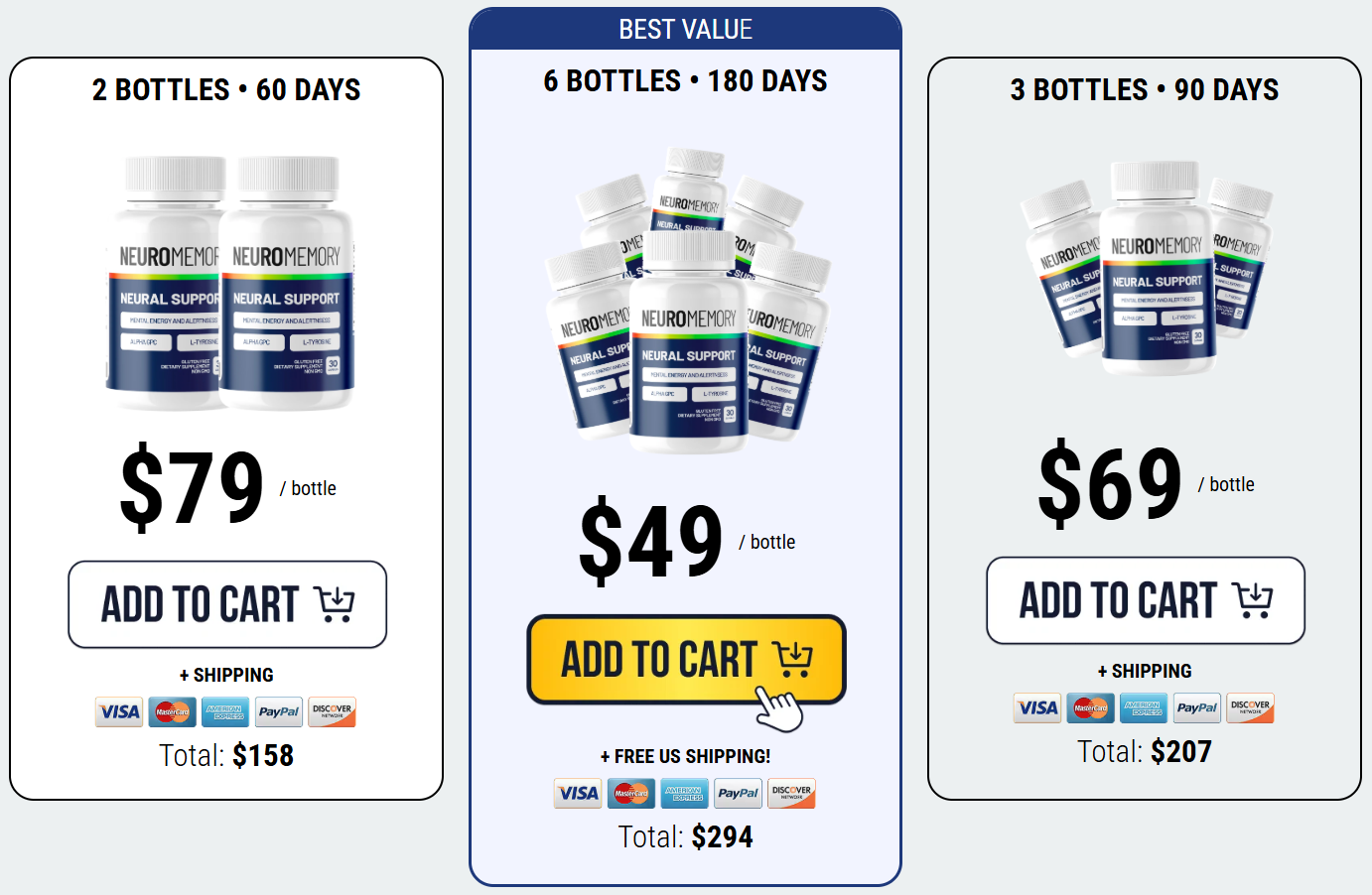
Neuro Memory package and bundle summary

Neuro Memory is typically sold in single-bottle and multi-bottle bundles, with per-bottle pricing generally decreasing on larger bundles. Exact current pricing, shipping terms and any active promotions are set by the manufacturer — the snapshot below is illustrative;

§9 — Guarantee

Does Neuro Memory offer a money-back guarantee?

Neuro Memory money back guarantee seal graphic

Neuro Memory is generally sold with a refund window, commonly structured around a 60-day trial period on direct orders from our side — but the exact number of days, condition requirements (such as returning empty bottles), and any restocking terms are set by the manufacturer and can change.

Before ordering, read the current refund policy in full rather than relying on summary.

§10 — Frequently Asked Questions

Neuro Memory FAQs

Neuro Memory is used as a daily cognitive-support supplement intended to support memory, focus and mental clarity. Neuro Memory is not a drug and is not intended to diagnose, treat, cure or prevent any disease.

Neuro Memory's individual ingredients were mostly studied over 8 to 12 weeks or longer of consistent daily use before researchers measured cognitive change, so Neuro Memory should be evaluated over a similar timeframe rather than after a single dose.

Neuro Memory combines ingredients that were generally well tolerated across the cited human trials, but "generally well tolerated in trials" is not the same as "risk-free for everyone." Talk to a doctor before taking Neuro Memory daily, particularly if you take prescription medication.

Neuro Memory may interact with certain medications — Ginkgo Biloba in particular has documented interactions with blood-thinning medication, and cholinergic ingredients like Alpha-GPC may interact with anticholinergic drugs. Review Neuro Memory's full ingredient list with a pharmacist or physician if you take any prescription medication.

Neuro Memory is not recommended for pregnant or nursing individuals, minors, or anyone with a bleeding disorder or scheduled surgery, without first speaking to a doctor, given the blood-flow-related ingredients in the Neuro Memory formula.

Neuro Memory can be purchased directly from here, which also lists current bundle pricing and the manufacturer's refund policy.

§12 — Buyer's Checklist

What should you check before buying Neuro Memory?

Confirm the dosage per ingredient

Compare Neuro Memory's label against the doses actually used in the studies cited on this page — a shared ingredient name doesn't guarantee a matched dose.

Check for medication interactions

Several Neuro Memory ingredients (Ginkgo, Alpha-GPC) have documented interaction risks. Review your current medications with a pharmacist first.

Set a realistic timeline

Most benefits described in the underlying research took 8–12+ weeks of consistent daily use to appear — don't judge Neuro Memory after a few days.

Buy from the official page

Purchasing directly through the official Neuro Memory order page is the only way to be covered by the manufacturer's stated refund policy.

Read the full refund policy

Guarantee windows and conditions can change — read the current terms in full before you order rather than relying on any secondhand summary.

Have a health conversation first

If you're on medication, pregnant, nursing, or managing a chronic condition, loop in a doctor before starting Neuro Memory or any new supplement.

§13 — Research Elaboration

What does the broader research say about memory-support supplementation?

Cognitive decline and memory complaints sit at the intersection of several distinct research areas: cerebral blood flow, oxidative stress, the cholinergic system, and the neuroendocrine stress response. Neuro Memory's formulation draws on all four rather than a single narrow theory. The three pages below go deeper into the underlying science, written as standalone educational references.

Claim Your Discount below. With Sure 60-days money-back guarantee.

discounted pricing image

Regular Pricing: $1134

Todays Price: $294 Only

Claim Discount